Featured Articles
December 24: A Day in Boxing History – Freddie Miller vs. Panama Al Brown in Paris

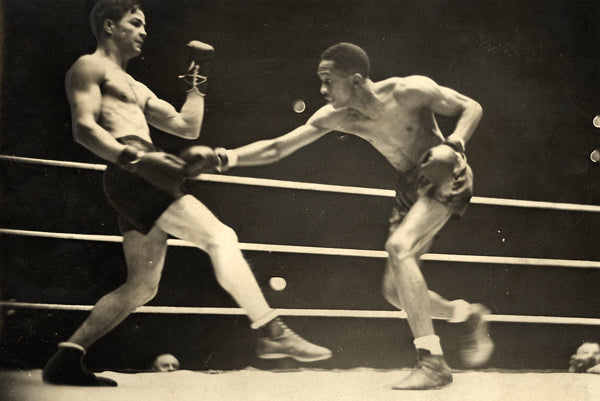
December 24: A Day in Boxing History – Freddie Miller vs. Panama Al Brown in Paris
While Christmas Eve has seldom hosted championship events, it has nonetheless produced moments that speak to boxing’s international reach and relentless pace during earlier eras. On December 24, 1934 in Paris, two of the sport’s most accomplished globetrotters met in a bout that reflected both the competitive depth and global character of boxing.
Freddie Miller Defeats Panama Al Brown — December 24, 1934 (Paris, France)
Archived fight records confirm that on this date, American featherweight Frederick M. Mueller, known professionally as Freddie Miller, earned a 10-round unanimous decision over former bantamweight world champion Panama Al Brown at the Palais des Sports in Paris, France. The bout was contested at featherweight and carried no title designation, despite Brown having held world championship recognition at bantamweight earlier that same year. While detailed round-by-round scoring from the era has not survived, the result is consistently recorded across long-standing boxing chronologies and official fight listings, which note that Miller controlled the contest over the scheduled distance.
The match-up reflected the international character of elite boxing in the 1930s, when Paris functioned as one of Europe’s premier fight capitals. The Palais des Sports routinely hosted world champions and top contenders from multiple divisions, and the December 24 card was no exception, featuring a full slate of competitive bouts beneath Miller and Brown. At the time, Miller was already an established featherweight champion and one of the most active titleholders of his era. Between 1933 and 1936, he defended the NBA featherweight title a dozen times and, during a remarkable stretch in 1935, went undefeated in 26 consecutive bouts over nine months; a workload that would be virtually unimaginable for a modern champion.
Miller’s career was defined by its global scope. Beyond Paris, he fought across Europe, North America, Africa, and Latin America, appearing in cities such as Liverpool, Barcelona, Dublin, Brussels, Belfast, Glasgow, Madrid, Havana, Caracas, Mexico City, Johannesburg, Toronto, and Sydney. That level of international activity was rare even in boxing’s busiest era and reinforces his reputation as a durable, technically sound champion willing to face elite opposition wherever opportunities arose.
Across the ring stood Panama Al Brown, born Alfonso Teófilo Brown, one of the most significant figures in boxing history. Brown was the first Hispanic world champion and among the sport’s earliest truly global stars, competing professionally in more than a dozen countries. A major draw in France throughout the 1920s and 1930s, he helped establish European markets as viable destinations for elite fighters outside the United States. Despite the loss to Miller, Brown’s durability remained a defining trait: according to historical record reconstructions, he was never stopped inside the distance during his long professional career, regardless of variations in reported totals for his wins and losses.
Miller’s victory over Brown offers revealing insight of the sweet science’s interwar years; a period defined by relentless schedules, international travel, and champions who tested themselves far beyond familiar territory.