Featured Articles
Two Heavyweights, Two Eras: Dereck Chisora and Jess Willard


Two Heavyweights, Two Eras: Dereck Chisora and Jess Willard
December 29 — A birthday reflection on endurance, scale, and the evolving demands of heavyweight boxing
Heavyweight boxing has never been one-dimensional. It has combined spectacle with risk, skill with force, shaped by the time in which it is contested. On December 29, two fighters separated by more than a hundred years are joined by a truth the division has long enforced: physical size alone has never been enough.
Dereck Chisora and Jess Willard lived their careers under vastly different rules, structures, and expectations. One navigated boxing’s modern global circuit. The other ruled during a time when champions traveled by rail and titles were defended in remove venues. Both, in their own way, came to define what heavyweight boxing demanded of those willing to stand in its center.
Dereck “War” Chisora: Longevity in the Modern Crucible
Born in Mbare, Zimbabwe, and raised in Britain, Dereck Chisora turned professional in 2007, entering a heavyweight landscape already crowded with champions, contenders, and shifting promotional alliances. From the outset, his career unfolded as a sustained test of durability.
Chisora became British, Commonwealth, and European heavyweight champion, grounding his résumé in domestic and continental success before testing himself at the highest level. In February of 2012, he challenged Vitali Klitschko for the WBC heavyweight title. The fight took place in Munich, Germany and Klitschko won by unanimous decision after 12 rounds, with scores of 118-110 (2x) and 119-111. The fight went the full distance, and although Chisora stayed competitive, Klitschko’s experience, reach, and control over the fight were reflected in the outcome.
What followed was a career defined by volume. Chisora faced Tyson Fury three times, fought Dillian Whyte and Joseph Parker twice, and shared the ring with David Haye, Oleksandr Usyk, and others across multiple eras of the heavyweight division. His record as of February 2025 shows 36 wins (23 KOs) and 13 losses, reflecting that reality. It may not be pristine, but it is unmistakably earned.
In a period when many careers are carefully managed, Chisora’s stands as one of exposure. He is a fighter repeatedly measured against the best available competition of his time.
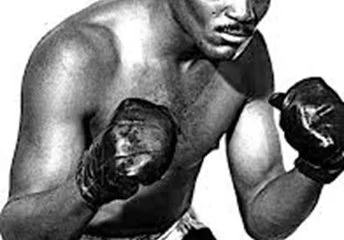
Jess Willard “The Pottawatomie Giant” : The Colossus of a Different Century

Born in St. Clere, Kansas, in 1881, Willard rose to prominence at a time when boxing lacked unified commissions, standardized gloves, or consistent medical oversight. Standing roughly 6 feet 6½ inches, he was one of the largest heavyweight champions the sport had yet seen; a physical anomaly in the early 20th century.
During his career, Willard faced many of the defining heavyweights of boxing’s early twentieth century. He won the world heavyweight championship by defeating Jack Johnson in 1915, later defending the title against Frank Moran, before losing it to Jack Dempsey in 1919. Earlier in his career, Willard also shared the ring with established contenders such as Gunboat Smith and Al Kaufman. His reign unfolded during a turbulent period for both boxing and the world beyond it, as the sport searched for structure and legitimacy.
Willard’s professional record (22–5–1, 20 KOs) reflects an era when heavyweight champions fought less frequently, but often under grueling conditions. His 1919 loss to Jack Dempsey ended his championship reign and is widely viewed as a turning point, ushering in a faster, more aggressive heavyweight style.
Shared Ground Across Time
The careers of Chisora and Willard intersect in purpose; each operated at the outer limits of what his era demanded. Willard carried the heavyweight title through boxing’s early, unregulated frontier. Chisora endured boxing’s modern gauntlet, facing elite opposition repeatedly over nearly two decades.
Neither career is defined solely by victories. Both are defined by exposure; to risk, to consequence, and to the full weight of the heavyweight division.
December 29
On this date, boxing remembers two men whose careers remind us that heavyweight boxing is less about perfection than persistence. Their stories are records, dates, opponents, and outcomes preserved in the history books. And in a sport that often forgets its past in pursuit of its next star, that alone is worth honoring.
To comment on this story in the Fight Forum CLICK HERE