
Featured Articles
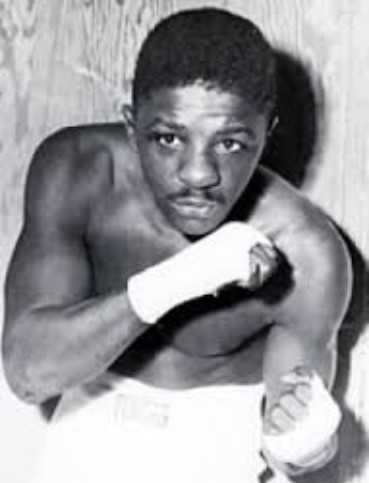
Percy Bassett: A January 3 Birthdate and a Featherweight’s Long Climb

Percy Bassett: A January 3 Birthdate and a Featherweight’s Long Climb
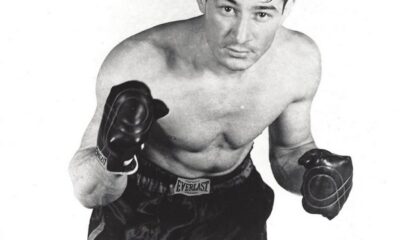
Percy Bassett’s boxing life unfolded firmly within the realities that defined mid-20th-century prizefighting. Born January 3, 1930, in Danville, Virginia, Bassett emerged during a period when professional boxing careers were built through volume, regional travel, and sustained competition.
Bassett turned professional on July 31, 1947 and competed primarily as a featherweight through the 1950s, establishing himself as a durable, high output fighter in one of boxing’s deepest divisions.
A Career Built on Activity and Opposition
Bassett’s professional record reflects the realities of his era: a long slate of fights, frequent appearances, and steady opposition. His schedule was demanding, often placing him in the ring against experienced contenders rather than developmental opponents.
Rather than rising through a single promotional pipeline, Bassett fought throughout the Eastern United States, gradually earning recognition as a legitimate featherweight contender. His success came from the accumulation of wins stacked over years of consistent competition.
Contender Status and Championship Context
Bassett reached his competitive peak in the early 1950s, a period when the featherweight division was in transition. Because championship recognition in the 1950s was fragmented and often disputed, it is important to frame Bassett’s accomplishments within that context.
In February 1953, Bassett defeated Ray Famechon in Paris in an interim world featherweight title bout. Bassett dropped Famechon at the end of the third round and Famechon was out. Famechon happened to be next to his corner when he went down, and his cornermen dragged him back to the corner. They tried to revive him to no avail, thus Famechon was unable to come out for the next round and the fight was over.
It’s important to point out that this was not a universally recognized world championship in the traditional sense; it was recognized as an interim title due to Saddler’s absence as he was serving in the U.S. Army. Saddler was, however, in attendance as a spectator that night. Saddler later returned and resumed championship status, and Bassett never had the opportunity to fight for the undisputed world title.
Bassett operated at or near the top of the featherweight class, sharing the ring with fighters who were similarly ranked and widely respected. He faced off with notable opponents including: Orlando Zulueta, Cisco Andrade, Redtop Davis, Jimmy Carter, Lulu Perez, Joey Lopes, and Frankie Sodano.
Style, Durability, and Reputation
Bassett was known less for flamboyance than for consistency. Fight reports from the era describe him as a pressure-oriented featherweight with solid punching power and the conditioning to sustain a high pace. His knockout total suggests effectiveness; he was a fighter who could finish when opportunity appeared, but who was equally prepared to work through long rounds.
He remained competitive well into the later stages of his career, an indication of both physical durability and ring intelligence.
In Bassett’s final professional bout, his opponent Seraphin Ferrer came into the fight sporting a 16 – 0 record. Bassett rallied from a first round knockdown and returned the favor by dropping Ferrar twice in the ninth round. After Ferrar was knocked down again in the tenth, the referee stopped the bout. Ferrer had been ahead on the scorecards at the time of the stoppage.
Following this bout, Bassett was diagnosed with a detached retina, cutting his career short at the age of 25. Bassett retired with a record of 64 – 12 -1 with 41 wins coming by way of knockout.
As a side-note, Ferrer, Bassett’s opponent in his last bout, would add three more wins, all inside the distance. Ferrer then took on legendary Duilio Loi, who came in also with just one loss, his record standing 67-1-4 with the EBU European Lightweight title on the line. Ferrar would lose a fifteen round decision.
Life Beyond the Ring
After stepping away from active competition, Bassett remained connected to boxing by working with younger fighters. As with many boxers of his generation, his transition from the ring was via a continuation of labor rooted in the sport he knew.
Bassett died in 1993, closing the chapter on a life shaped by boxing’s mid-century grind.
A Measured Legacy
Percy Bassett’s story reflects a version of boxing history where advancement required repetition, resilience, and acceptance of risk as a constant companion.
On January 3, boxing remembers a fighter whose career was defined by presence and consistency – week after week, year after year — in a division that demanded both toughness and commitment.
To comment on this story in the Fight Forum CLICK HERE



Sebastian Fundora: The Towering Inferno’s Ascent in the Sweet Science

Anthony Joshua Discharged from Hospital After Fatal Nigeria Car Crash — Latest Updates

December 26: This Day in Boxing History — Jack Johnson, Muhammad Ali, and Global Heavyweight Legacy

I’m Betting on Jake Paul … To Live*

December 28: This Day in Boxing History: The Enduring Legacy of George Dixon

Anthony Joshua Injured in Fatal Car Crash in Nigeria

Inoue’s Mastery and Nakatani’s Resolve Define Riyadh Fight Night

December 31: This Day in Boxing History — Legends Were Tested and Titles Changed Hands

Avila Perspective Chap 356 Jake Paul vs Anthony Joshua and Female Champions

Amanda Serrano Wins Action-Packed Decision and Other MVP fight results
Amanda Serrano Wins Action-Packed Decision and Other MVP fight results

Percy Bassett: A January 3 Birthdate and a Featherweight’s Long Climb

Emanuel Augustus: Boxing’s Unconventional Craftsman

January 2: This Day in Boxing History – Title Changes and Defining Fights

January 1: This Day in Boxing History: Gans, Levinsky, and Boxing’s Early Years

Rocky Graziano and the Making of a Middleweight Legend

Avila Perspective Chap 358: Boxing – The Best of 2025
Anthony Joshua Discharged from Hospital After Fatal Nigeria Car Crash — Latest Updates
December 31: This Day in Boxing History — Legends Were Tested and Titles Changed Hands

TSS 2025 Round of the Year

-
 Featured Articles1 week ago
Sebastian Fundora: The Towering Inferno’s Ascent in the Sweet Science
-
 Featured Articles6 days ago
Anthony Joshua Discharged from Hospital After Fatal Nigeria Car Crash — Latest Updates
-
 Featured Articles2 weeks ago
December 26: This Day in Boxing History — Jack Johnson, Muhammad Ali, and Global Heavyweight Legacy
-
 Featured Articles3 weeks ago
Diego Pacheco, Joe Cordina, Tito Mercado, and Skye Nicolson Triumph in Stockton
-

 Featured Articles4 weeks ago
Murat Gassiev KOs Kubrat Pulev in Dubai
-
 Featured Articles3 weeks ago
I’m Betting on Jake Paul … To Live*
-
 Featured Articles3 weeks ago
The Sweet Science Weekly— December 15, 2025
-
 Featured Articles1 week ago
December 28: This Day in Boxing History: The Enduring Legacy of George Dixon