
Featured Articles
Virgil Hill: Quicksilver’s Long Road to Boxing History

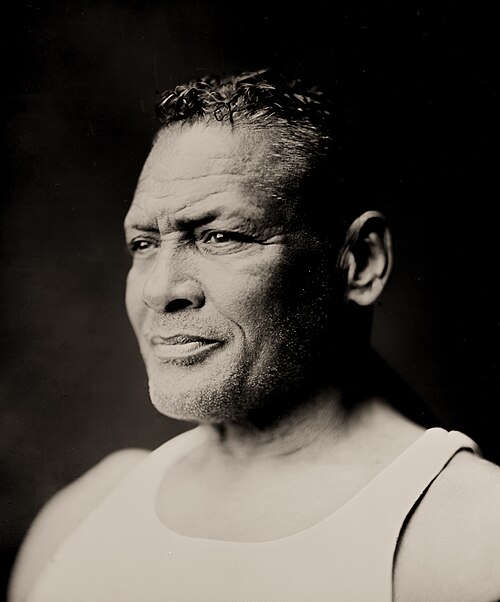
Virgil Hill: Quicksilver’s Long Road to Boxing History
Virgil Eugene “Quicksilver” Hill stands among America’s most accomplished boxers of the late 20th century. He was a fighter whose precision, persistence, and professional longevity set him apart in a crowded era of light heavyweight talent. Born on January 18, 1964, in Clinton, Missouri, Hill built a career rooted in rigorous fundamentals and backed by world titles in two weight classes.
From Missouri to Olympic Silver
As an amateur, he represented the United States at the 1984 Summer Olympics in Los Angeles, capturing a silver medal in the middleweight division. His Olympic run included victories over opponents from Barbados, Great Britain, Yugoslavia, and Algeria before a narrow final loss with a score of 3 – 2 to South Korea’s Shin Joon-Sup. That same year, he also claimed the 1984 National Golden Gloves middleweight title.
Hill left the amateur ranks with a final record of 288 wins against 11 setbacks.
Professional Breakthrough and Light Heavyweight Royalty
Hill turned professional later in 1984 and quickly made his mark. After eighteen straight wins to start his pro career, he sought his first world title. In September 1987, Hill faced Leslie Stewart for the WBA light heavyweight championship. With a blistering performance in Atlantic City, Hill scored a fourth-round TKO to seize the title and begin a dominant run at 175 pounds.
Over the next decade, Hill defined excellence in the light heavyweight division. He defended his belt multiple times, with a total of 20 successful defenses over two terms as champion. A career highlight came in November 1996, when Hill unified the WBA and IBF light heavyweight titles with a victory over Henry Maske in Munich. Hill’s consistency at the top tier of the sport was undeniable.
A Stretch of Greatness
Hill started his professional career with 30 straight wins before dropping a twelve round decision to future Hall of Famer Thomas Hearns. He then realed off another thirteen wins, running his record to 43 – 1. He achieved wins against notable foes including Bobby Czyz, Frank Tate (twice), and Fabrice Tiozzo (twice).
In the first encounter between Hill and Tiozzo (April 3, 1993), Tiozzo walked into a jab that knocked him down, but he was back on his feet before there was even a count. At the conclusion of the bout, the judges scored it a split decision. Seven years later, On December 9, 2000, Hill and Tiozzo met again, with Hill entering the bout as a 15-1 underdog. “Quicksilver” promptly stopped Tiozzo in the first round. Tiozzo retired from the sport with a record of 48 – 2, 32 by way of knockout. His lone two losses came at the hands or Virgil Hill.
Hill’s other notable losses came against Dariusz Michalczewski and Hearns’ fellow future of Hall of Famer Roy Jones Jr., the latter stopping Hill in an April 1998 match after a powerful body shot left him unable to continue; the first stoppage of his professional career.
The Cruiserweight Chapter
After years at light heavyweight, Hill moved up in weight and continued to find success. In December 2000, he won the WBA cruiserweight title, showcasing the same technical skills that had defined his earlier career.
Hill lost the cruiserweight title to Jean Marc Mormeck in 2002; and then in 2006, he then reclaimed a world cruiserweight championship by outpointing Valery Brudov and lifting the WBA “regular” cruiserweight title, thereby adding another chapter to his championship legacy in a weight class he had previously held.
Final Record and Longevity
By the end of his professional journey, Hill had compiled a record of 51 wins and 7 losses, with 24 knockouts.
His ability to compete at a high level across two divisions over decades reflects a rare blend of technical savvy, conditioning, and resilience.
Hall of Fame Recognition and Legacy
In 2013, Hill was honored with induction into the International Boxing Hall of Fame, a fitting acknowledgment of both his achievements inside the ring and his impact on the sport.
Hill’s legacy transcends simple statistics. He stood at the summit of a competitive light heavyweight era and proved adaptable enough to win titles at cruiserweight as well. His moniker “Quicksilver” was accurate, as it represented his movement, timing, and tactical control.
Outside the ring, Hill’s influence continued. Recognized as a symbol of North Dakota pride (where he was raised and trained), he received the Theodore Roosevelt Rough Rider Award, the highest civilian honor bestowed by the state of North Dakota, celebrating both his athletic achievements and his role as a community figure.
Celebrating Virgil Hill on his Birthday
Virgil Hill’s career tells a story of precision and consistency. Few fighters transition so seamlessly between divisions or sustain elite relevance for as long as he did. In late 20th-century boxing, where styles clashed and stars flared, Hill was the steady hand; a champion in every sense, and a name that belongs in any comprehensive discussion of the sport’s most complete fighters.
North Dakota’s aspirational motto is “Be legendary”. You have to look no further than their favorite son Virgil “Quicksilver” Hill.
To comment on this article in the Fight Forum, please CLICK HERE.


Anthony Joshua Discharged from Hospital After Fatal Nigeria Car Crash — Latest Updates

December 31: This Day in Boxing History — Legends Were Tested and Titles Changed Hands

Amanda Serrano Wins Action-Packed Decision and Other MVP fight results

Agit Kabayel Rallies to Stop Damian Knyba, Claims Interim WBC Heavyweight Title

Emanuel Augustus: Boxing’s Unconventional Craftsman

Avila Perspective Chap 358: Boxing – The Best of 2025

January 2: This Day in Boxing History – Title Changes and Defining Fights

Avila Perspective Chap 359 Heavyweights, Super Lights and More

Early 2026: Boxing Results and Emerging Storylines

Rocky Graziano and the Making of a Middleweight Legend

Virgil Hill: Quicksilver’s Long Road to Boxing History

Muhammad Ali and Oleksandr Usyk: Same Day, Different Worlds

Curiel Stays the Course as DAZN Card Pushes On Without Rocha

Celebrating Roy Jones Jr. and Matt Godfrey on Their Birthday

Avila Perspective Chap 360 Southern Cal Boxing Wars Resume

Tony DeMarco & Rubén Olivares: Fighters Forged by Grit and Glory

January 13 Birthdays in Boxing: Briedis, Limón & Green — Stories of Strength and Identity
Early 2026: Boxing Results and Emerging Storylines

This Week in Boxing History (January 12 – 18)

Joe Frazier: The Relentless Heart of a Heavyweight Legend

-

 Featured Articles3 weeks ago
Sebastian Fundora: The Towering Inferno’s Ascent in the Sweet Science
-
 Featured Articles3 weeks ago
Anthony Joshua Discharged from Hospital After Fatal Nigeria Car Crash — Latest Updates
-
 Featured Articles3 weeks ago
December 26: This Day in Boxing History — Jack Johnson, Muhammad Ali, and Global Heavyweight Legacy
-
 Featured Articles3 weeks ago
December 31: This Day in Boxing History — Legends Were Tested and Titles Changed Hands
-
 Featured Articles2 weeks ago
Amanda Serrano Wins Action-Packed Decision and Other MVP fight results
-
 Featured Articles3 weeks ago
December 28: This Day in Boxing History: The Enduring Legacy of George Dixon
-

 Featured Articles3 weeks ago
Anthony Joshua Injured in Fatal Car Crash in Nigeria
-
 Featured Articles1 week ago
Agit Kabayel Rallies to Stop Damian Knyba, Claims Interim WBC Heavyweight Title