
Featured Articles
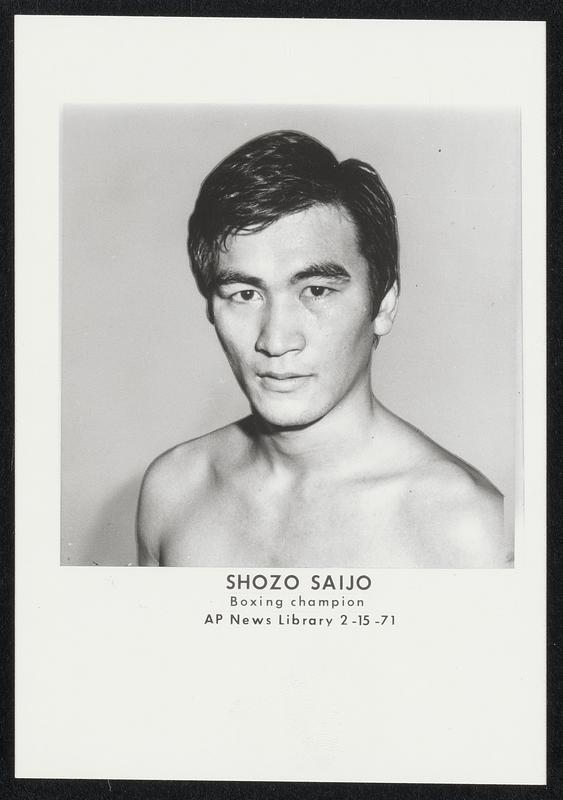
Shozo Saijo: Japan’s Featherweight Pioneer and Trailblazing Champion

Shozo Saijo: Japan’s Featherweight Pioneer and Trailblazing Champion
Shozo Saijo was born on January 28, 1947, in Saitama, Japan. He would rise from promising prospect to a featherweight world champion whose accomplishments helped define an era of Japanese boxing. His career was defined by stubborn resilience and remarkable achievements.
The Early Years
Saijo turned professional on August 13, 1964, entering the bantamweight ranks as a young stylist with promise.
His lone setback in his first dozen pro fights came via a points loss. And then after a pair of decision losses, he reeled off thirteen wins in a row. Saijo’s determination and adaptability would impacted his career and enabled him to put Japanese boxing on the international stage.
Breaking Through: From Challenger to Contender
Saijo’s path to the title began in the United States, where he embarked on a series of fights against international competition. One pivotal moment came on June 6, 1968, when Saijo faced Raul Rojas in a non-title bout at the Olympic Auditorium in Los Angeles. In a closely contested fight, Saijo secured a majority decision over Rojas, giving him a crucial psychological and strategic edge before their official title clash later that year.
World Featherweight Champion
The defining moment of Saijo’s career arrived on September 27, 1968, at the Memorial Coliseum in Los Angeles, California, when he challenged Raul Rojas for the WBA featherweight world title. In a 15-round battle, Saijo’s disciplined style and effective combinations earned him a unanimous decision victory and the featherweight crown. In achieving this, he became the first Japanese boxer to win a world title on foreign soil and only the seventh Japanese fighter ever to capture a world championship.
The Dominant Reign: Defenses and Style
Saijo’s reign as champion was distinguished by consistency and technical proficiency. Over the next three years, he successfully defended the featherweight title five times. His defenses included notable victories such as a unanimous decision victory of Pedro Gomez on February 9, 1969 in Tokyo, a second-round knockout against Jose Luis Pimentel on September 7, 1969, a unanimous decision win over Godfrey Stevens on February 8, 1970, and two victories over Frankie Crawford (once in July of 1970 and the second, almost eight months later). His accomplishments and ring generalship, including his skills of blending tactical movement and efficient punching, made him a respected figure in Japan and internationally.
Career Record and Legacy
After a distinguished run, Saijo’s reign ended on September 2, 1971, when he lost the featherweight title to Venezuela’s Antonio Gómez by fifth round stoppage.
Shozo Saijo closed his professional boxing career with a record of 38 total fights — 29 wins (8 by KO), 7 losses, and 2 draws. He was the first Japanese world champion to win a title abroad, a five-time featherweight title defender whose wins spanned opponents from the Americas, Europe, and Asia, and he pioneered Japanese presence in world featherweight rankings and elevated Japan’s reputation in international boxing.
Impact Beyond the Ring
Saijo’s career resonates not only because of his title but because of what it represented; globalization of boxing talent at a time when world titles were dominated by fighters from the Americas and Europe. By defeating a champion like Raul Rojas in the United States, Saijo demonstrated that elite skill and championship ambition were not bound by geography, a precursor to the continued rise of Japanese and Asian world champions in subsequent decades.
Boxers such as Hisashi Amagasa, Kuniaki Shibata, and more recently Naoya Inoue have followed in the lineage of Japanese fighters who cemented their place on the world stage.
Birthday wishes go out to retired champion, Shozo Saijo.
To comment on this post in the Fight Forum CLICK HERE.



Agit Kabayel Rallies to Stop Damian Knyba, Claims Interim WBC Heavyweight Title

Early 2026: Boxing Results and Emerging Storylines

Celebrating Mike Ayala on his Birthday

Artur Beterbiev: Power, Persistence, and the Pursuit of Boxing Immortality

This Week’s Birthdays in Boxing: Three Heavyweights, Three Paths

Celebrating Roy Jones Jr. and Matt Godfrey on Their Birthday

Joe Frazier: The Relentless Heart of a Heavyweight Legend

The Boxing Landscape This Week: Results, Rumors, and What’s Next

Muhammad Ali and Oleksandr Usyk: Same Day, Different Worlds

Avila Perspective Chap 360 Southern Cal Boxing Wars Resume

“Tank” Davis Arrested in Miami as Legal Case Clouds Boxing Future
Shozo Saijo: Japan’s Featherweight Pioneer and Trailblazing Champion

This Week in Boxing

Remembering Salvador Sánchez, Boxing’s Unfinished Masterpiece

George Godfrey: The Leiperville Shadow — The Uncrowned King of Heavyweight Boxing

Muratalla Retains IBF Lightweight Crown With Majority Decision Over Cruz

Callum Walsh Cruises Past Ocampo as Zuffa Boxing Launches in Las Vegas

Champion Lupe Aquino

Ryan Garcia and Mario Barrios Meet in Hollywood

Nigel Benn: The Dark Destroyer

-

 Featured Articles4 weeks ago
Anthony Joshua Discharged from Hospital After Fatal Nigeria Car Crash — Latest Updates
-
 Featured Articles4 weeks ago
December 31: This Day in Boxing History — Legends Were Tested and Titles Changed Hands
-
 Featured Articles4 weeks ago
Amanda Serrano Wins Action-Packed Decision and Other MVP fight results
-
 Featured Articles3 weeks ago
Agit Kabayel Rallies to Stop Damian Knyba, Claims Interim WBC Heavyweight Title
-
 Featured Articles2 weeks ago
Early 2026: Boxing Results and Emerging Storylines
-
 Featured Articles4 weeks ago
Emanuel Augustus: Boxing’s Unconventional Craftsman
-

 Featured Articles4 weeks ago
Avila Perspective Chap 358: Boxing – The Best of 2025
-
 Featured Articles1 week ago
Celebrating Mike Ayala on his Birthday