Featured Articles
Charley Goldman: The Little Man Who Built Giants

Charley Goldman: The Little Man Who Built Giants
Charley Goldman liked to say that boxing stripped away illusion. He was interested in reality, not in the cinematic version of the sport, not the polished style celebrated in highlight reels, but the version that revealed what actually worked once the bell rang. In Goldman’s world, results mattered far more than appearance.
“A lot of people say Rocky don’t look too good in there,” he once remarked, dismissing notions of style. “But the guy on the ground don’t look too good either.”
That was Charley Goldman in a nutshell, a diminutive man with a quiet voice and a baritone understanding of what the fight game really required.
From Warsaw Streets to Brooklyn Bouts
Born Israel Goldman on December 22, 1887, in Warsaw, Poland, Goldman’s earliest chapters were written in the rough-and-tumble streets of Red Hook, Brooklyn. A neighborhood where youthful fists were often the only defense against a world that offered little mercy, Goldman’s early fights were as much about survival as they were sport.
He turned professional in 1904, at age 16, at a time when boxing was still wrestling with legality and regulation. Though only about 137 of his bouts were officially recorded, he claimed (and the context of the era supports this) that he fought more than 400 times in venues as varied as saloon floors and clandestine rings.
Goldman didn’t merely participate: he endured. His first professional fight, held in a Brooklyn saloon, was halted by police after 42 rounds and ruled a draw; a surreal testament to both his stamina and the chaotic early days of the sport.
He fought some of the more respected names of the era from George “KO” Chaney to Johnny Coulon, and engaged in epic series with rivals like Whitey Kitson, whom he reportedly faced 60 times, including twice in a single day and even for 12 consecutive nights.
Goldman’s résumé, highlighted by 88 recorded wins, reflects a fighter of rare toughness, consistency, and technical ability. While he never wore a world title belt, his career was shaped by an unwavering willingness to fight through adversity. Chronic hand injuries, suffered and re-suffered in the ring, left permanent damage; a silent but powerful testament to the grit and resolve that carried him through a demanding decade at the highest levels of the sport.
The Trainer Who Refused to Rebuild Fighters
After retiring from active competition in 1914, Goldman quickly found success in a new role. He took the lessons of the ring, including those of precision, adaptation, instinct and applied them as a trainer.
His first major triumph was training Al McCoy for the World Middleweight Championship (1914–1917), and guiding him through the changing landscape as the sport edged toward modern regulation with laws like New York’s Walker Law in 1920.
Goldman’s belief was simple but radical: don’t remake a fighter; magnify his strengths. As he famously put it, “Training a promising kid is like putting a quarter in one pocket and taking a dollar out of the other.”
That philosophy created champions. Over the decades he trained champions such as Lou Ambers, Joey Archibald, Abe Goldstein, Kid Kaplan, Rocky Marciano, Al McCoy, Marty Servo and Al Singer.
Seeing Rocky Before the World Did
Rocky Marciano was a heavyweight with a ferocious punch and a raw style that confounded observers.
Goldman saw something others didn’t: a fighter with power and heart that was immeasurable. His approach was not to impose a textbook style of fighting, but to strengthen what was already there. He worked on Marciano’s jab, his left hook, his defense; he taught him to shorten his punches, to fight from a crouch, to harness the angles and mechanics that would make him tougher to hit and more devastating when he struck.
“If you got a tall fighter, make him taller,” he said. “If you got a short fighter, make him shorter.”
Under Goldman’s guidance, Marciano became more than a hard hitter; he became a strategic force. The result: 49 victories in 49 professional bouts, including 43 knockouts, and the distinction of being the only undefeated heavyweight champion in history.
In the Corner and Beyond
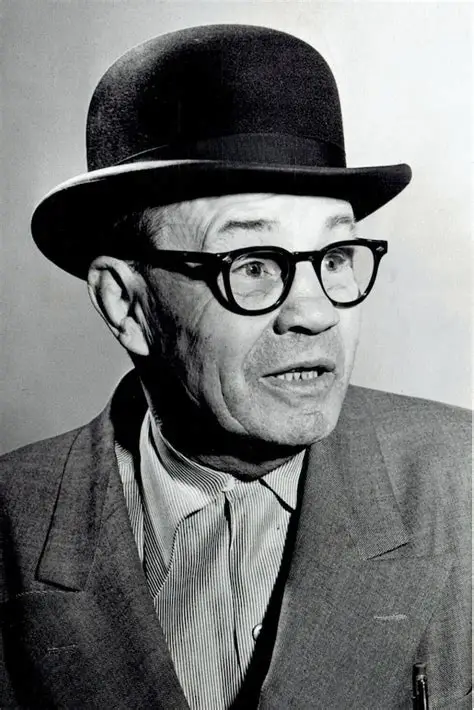
Goldman’s presence in the gym was as distinctive as his record. At 5-foot-1, with a black derby hat, horn-rimmed glasses, and the ever-present cigar, he cut an unforgettable silhouette. He was the antidote to flamboyance; a man who listened before he spoke, and when he did, treated language as purpose, not chatter.
His methods were meticulous. He believed limitations were often a matter of perspective. For example, leverage could be found in unlikely places; a jab thrown out of a crouched position from a short fighter could outperform a textbook reach advantage. His success wasn’t about reinventing boxing; it was about reframing it for fighters who didn’t fit the mold.
The Measure of a Legacy
Charley Goldman died of a heart attack on November 11, 1968, at the age of 80; an era of boxing history wrapped up with decades of personal experience and influence.
He was inducted into both the International Boxing Hall of Fame (1992) and the International Jewish Sports Hall of Fame (1999), honors that acknowledge both his technical mastery and cultural impact.
Goldman did not chase titles for himself in the ring, but he shaped them in others; a bantamweight scrapper whose legacy looms largest in the heavyweight portraits of his students. He understood boxing as a conversation between strengths and constraints, a lesson many fighters still carry forward today.
On his birthday, we remember Charley Goldman – a craftsman of fighters, a believer in grit, and a permanent voice in boxing’s corner.