Featured Articles
December 28: This Day in Boxing History: The Enduring Legacy of George Dixon

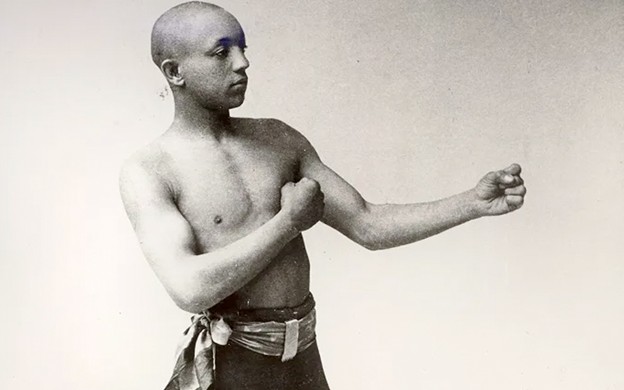
December 28: This Day in Boxing History: The Enduring Legacy of George Dixon
December 28 sits quietly on the boxing calendar, tucked between Christmas and New Year’s Eve, and by historical standards it is one of the least eventful dates the sport has to offer. No major title changes, no iconic upsets, no moments replayed endlessly on anniversary reels. But like everything else in boxing history, if you look hard enough and long enough, you eventually find something worth stopping for. And on December 28, 1888, there is a gem.
On that winter day more than a century ago, George Dixon stepped into the ring during the early phase of his remarkable career. Known as “Little Chocolate,” Dixon faced Hank Brennan in what was becoming a local rivalry. It was their third consecutive fight against one another, and like the two before it, the result would be a draw.
By that point, Dixon and Brennan had already developed a competitive familiarity, common in the bare-knuckle and early gloved eras. They first met on June 21, 1888, in a bout scheduled for 12 rounds that ultimately extended to 14 at the referee’s discretion. Dixon protested the additional rounds but fought on. Dixon scored a knockdown during the contest, but Brennan finished stronger, leading referee Tom Higham to declare the fight a draw.
Their second meeting came on December 4, 1888, when the pair fought nine rounds of a scheduled seven-round bout, once again exceeding the advertised distance. The outcome, like the first, was recorded as a draw. Three weeks later, on December 28, 1888, (one hundred and thirty seven years ago today) Dixon and Brennan met for the third time, completing all 15 scheduled rounds without a decisive verdict. Three consecutive fights. Three consecutive draws.
The rivalry did not end there. Dixon and Brennan would meet twice more in 1889; first in an exhibition on July 12, then in a 26-round contest on October 14 that again ended without a winner. In total, the two shared the ring a minimum of five times (it should be noted that records of that era are often incomplete).
George Dixon would go on to become a bantamweight champion and a two-time featherweight champion of the world. His career, spanning from 1886 to 1906, placed him against some of the most accomplished fighters of the period, including Abe Attell, Young Corbett II, Frank Erne, Pedlar Palmer, Young Griffo and Terry McGovern. What can be documented of Dixon’s record lists 74 wins, 31 losses, and 61 draws; numbers that reflect both the frequency of competition and the prevalence of draws in his era.
Dixon’s significance extends far beyond statistics. Born in Halifax, Nova Scotia, he became boxing’s first Black world champion, breaking barriers at a time when racial discrimination was deeply entrenched on both sides of the Atlantic. His success helped establish smaller weight classes as legitimate championship divisions and proved that elite skill, speed, and intelligence could command public attention in an era dominated by heavyweight fascination.
December 28’s connection to George Dixon provides a reminder of the sport’s foundation. On this day in 1888, one of boxing’s true pioneers continued building a legacy defined by consistency, courage, and historical firsts that still resonate more than a century later.
To Comment On This Post In The Fight Forum CLICK HERE