Featured Articles
Freddie Steele: Remembering the Tacoma Assassin on His Birthday

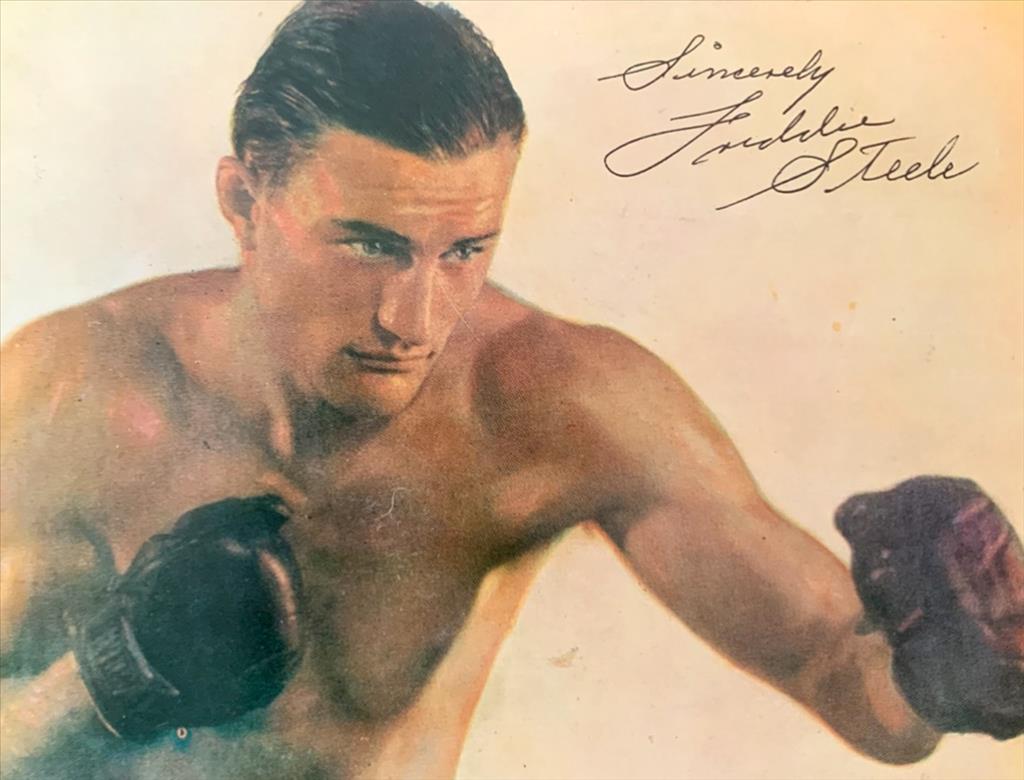
Freddie Steele: Remembering the Tacoma Assassin on His Birthday
Frederick Earl Burgett, born on December 18, 1912, in Seattle, Washington, would become one of the most formidable middleweights of the 1930s. Known in boxing as Freddie Steele and nicknamed the “Tacoma Assassin,” Steele’s blend of devastating power, technical skill, and fierce competitive spirit made him a standout champion in a crowded era of middleweight talent. Nearly a century later, his accomplishments in and beyond the ring remain a compelling testament to his talent.
A Rising Force from the Pacific Northwest
Steele grew up in Tacoma, Washington, and began his boxing career at an extraordinarily young age – turning professional in his early teens. He would go on to compile an extraordinary career record of 124 wins, (58 by knockout), just 5 losses, and 11 draws.
Steele’s managers helped guide him through a demanding schedule of fights that forged his reputation as one of America’s premier middleweights.
Stepping Into Greatness: The 1936 Title Victory
On July 11, 1936, in front of an enthusiastic home crowd at Civic Stadium in Seattle, Steele captured the NBA World Middleweight Championship by defeating reigning champion Eddie “Babe” Risko in a 15‑round unanimous decision. Steele floored Risko early and dominated much of the fight with accurate punching and ring generalship, prompting Associated Press writers to award Steele a clear victory.
This victory crowned Steele as world champion and solidified his place among the elite middleweights of his generation. It was also a moment of regional pride; bringing major boxing honor to the Pacific Northwest in a period when East Coast and Midwest fighters dominated the national scene.
Defending the Crown and Building a Legacy
As champion, Steele proved a formidable ruler of the middleweight division. On January 1, 1937, Steele retained his title by defeating former champion William “Gorilla” Jones via unanimous decision, dropping Jones in the seventh for a three count and winning nearly every round. This is thought to be the first time Jones was off his feet in 159 fights. In a rematch with Risko on February 19, 1937, at Madison Square Garden, Steele again prevailed in a 15‑round unanimous decision before a large crowd. Three months later, on May 11, Steele defended his crown again with a crushing third‑round knockout over Frank Battaglia in Seattle, flooring him multiple times on his way to victory.
In all, Steele made multiple successful title defenses — a mark of consistency and excellence during an era when the middleweight crown changed hands often. Contemporary analysts praised his balance, footwork, and knockout power, a rare combination in the competitive landscape of the 1930s.
Steele faced and defeated some of the top fighters of his era, including past and future champions such as Ceferino Garcia, Vince Dundee, Gorilla Jones, Ken Overlin, and Solly Krieger; forging a resume that ranks among the most impressive of his generation.
The End of the Reign and Career Challenges
Steele’s championship run came to a dramatic close on July 26, 1938, when he lost the title to fellow Seattle‑area boxer Al Hostak. Hostak, who would go on to become a dominant champion himself, stopped Steele in the first round before a record Seattle crowd, handing Steele his first title loss in years.
Though surprising to many fans at the time, modern analyses suggest Steele may have entered the fight hampered by injury and wear from an extremely busy competitive schedule; factors that sometimes shorten the career of even the sport’s best.
Steele stepped back into the ring only once more, losing to Jimmy Casino in 1941, and then retired from professional boxing.
Beyond the Ring: Hollywood and the Northwest’s Champion
After boxing, Steele transitioned to Hollywood, appearing in nearly 30 films during the 1940s. Notably, he worked as a boxing double (including for Errol Flynn) and appeared in films like Hail the Conquering Hero (1944) and The Story of G.I. Joe.
Eventually he returned to Washington state, where he and his wife Helen ran Freddie Steele’s Restaurant in Westport for more than two decades, cementing his status as a regional icon.
Steele passed away on August 22, 1984, in Aberdeen, Washington, after suffering a stroke four years earlier.
Legacy of a Champion
Steele’s influence on boxing was recognized formally when he was inducted into the International Boxing Hall of Fame in 1999; one of many honors that preserve his place in the sport’s history.
To Comment On This Post In The Fight Forum CLICK HERE