Featured Articles
Rocky Graziano and the Making of a Middleweight Legend

Rocky Graziano and the Making of a Middleweight Legend
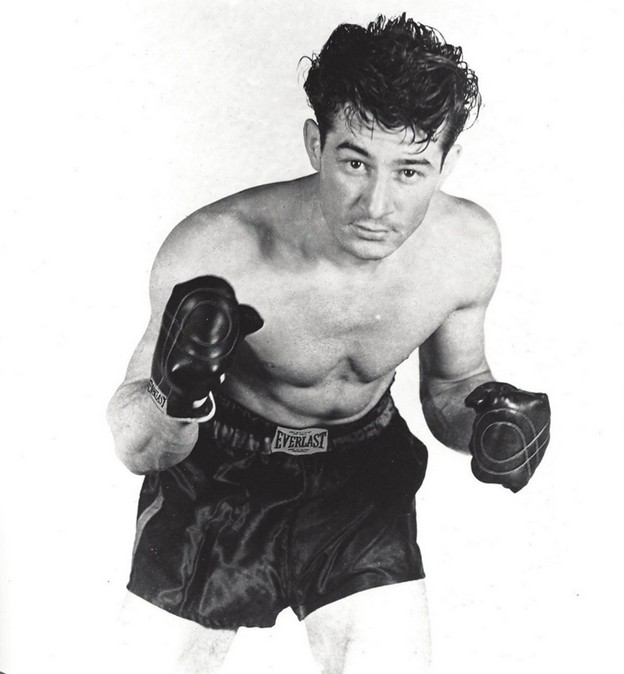
On January 1, 1919, Thomas Rocco Barbella was born in Brooklyn, New York, a child whose early years foreshadowed the grit and unpredictability that would define both his life and his boxing career. Better known to the world as Rocky Graziano, he grew into one of boxing’s most colorful figures; a champion whose career embodied both the physical brutality of the sport and the redemptive arc that captivates fans beyond the ring.
A Rough Beginning and Unlikely Entry
Graziano’s upbringing on the Lower East Side was marked by hardship and youthful trouble. Accounts of his early life describe formative years spent in juvenile reform schools and a wartime stint in the U.S. Army that ended in a dishonorable discharge after a series of disciplinary issues. While serving in the Army during World War II, he began fighting professionally, adopting the name Rocky Graziano, reportedly to avoid detection as he pursued boxing while AWOL. His military defiance led to a nine-month prison term at Fort Leavenworth, Kansas, but it also set the stage for a professional career he would soon launch upon his release.
Graziano made his professional debut on March 31, 1942, scoring a second-round knockout over Curtis Hightower. Over the next few years, his combination of powerful punching and tenacious style helped him build a reputation as a welterweight and middleweight contender worthy of serious attention.
The Path to Middleweight Glory
Despite the tumultuous path that brought him into the ring, Graziano’s skill was undeniable. By the mid-1940s, he was routinely knocking out contenders and winning against seasoned opponents, earning his shot at the middleweight title. His trilogy of fights with Tony Zale, one of boxing’s most celebrated series of the era, remain central to his legacy.
On September 27, 1946, Graziano fought Zale for the world middleweight championship at Yankee Stadium but was stopped by knockout in the sixth round. A year later, on July 16, 1947, Graziano returned to Chicago Stadium and knocked out Zale in the sixth round to capture the title. Their third meeting, on June 10, 1948, saw Zale regain the belt with a third-round knockout.
These bouts, characterized by their ferocity and drama, helped define the middleweight division in the post-war era and solidified Graziano as one of the toughest fighters of his generation.
Championship, Rivalries, and Style
Graziano’s reign as world middleweight champion (from 1947 to 1948) earned him a place among boxing’s elite. His career record upon retirement was 67 wins, 10 losses, and 6 draws, with 52 victories by knockout. These numbers place him among the most prolific punchers of his era, and he is widely considered to be one of the 100 biggest punchers of all time.
His fights weren’t defined by finesse so much as determination. Even in defeat, Graziano was respected for his ability to challenge opponents at the highest level. On April 16, 1952, he challenged the legendary Sugar Ray Robinson for the middleweight title at Chicago Stadium. Graziano tipped the scales at 159 3/4 and Robinson at 157 1/4. Graziano dropped Sugar Ray Robinson in Round 3 and then Ray Robinson did likewise, stopping Graziano in the same round.
Graziano’s final professional fight came later that same year, a ten-round decision loss to Chuck Davey. Shortly afterward, he retired from the sport he had dominated, struggled through, and ultimately transcended.
Beyond the Ring: Story, Film, and Legacy
Graziano’s impact extended well past his boxing record. His 1955 autobiography, Somebody Up There Likes Me, provided an unvarnished look at his life and struggles, resonating far beyond sports pages. The book was adapted into a 1956 film starring Paul Newman, further cementing Graziano’s place in American cultural history.
After boxing, Graziano appeared often on television and in commercials, maintained friendships with figures from entertainment circles, and even operated a small successfull pizza restaurant chain called Rocky Graziano Pizza Ring. His enduring presence in public life showcased the broad appeal of his persona, a former street kid turned world champion and raconteur.
In 1971, he was inducted into The Ring Magazine’s Boxing Hall of Fame, a formal recognition of a career that bridged athletic excellence, dramatic rivalry, and personal evolution.
A Life Marked by Punches and Persistence
Rocky Graziano died on May 22, 1990, in New York City, at age 71. His life story, from juvenile mischief and military trouble to world championship and Hollywood adaptation, unfolded in ways few boxing careers do. Yet at its core was a consistency that defined him as both athlete and character: he fought not just opponents in the ring, but the constraints of circumstance outside of it.
Graziano’s legacy remains in the record books and he is remembered fondly by fight fans: a middleweight champion, a fearsome puncher, and a figure whose life was as compelling as any of his fights.
To comment on this story in the Fight Forum CLICK HERE