Featured Articles
The Sweet Science: Boxing Highlights and Headlines

Boxing in Flux: Spectacle, Power, and the Shifting Center of the Fight Game
There is a rhythm to the sport of boxing that most outsiders never grasp until they spend adequate time around it: the slow pulse of training camp, the sharp burst of fight week hype, and the even slower settling of meaning once the crowds have gone home. Currently, that rhythm feels fractured. In the span of a few weeks, boxing has shifted from staged entertainment events in far‑flung capitals to heavyweight title ambitions, promotional infighting that reads like geopolitics, and rematches that could alter legacy.
Floyd Mayweather, Jr. and Manny Paquiao
In the landscape of boxing narratives, few figures loom as persistently as Floyd Mayweather, Jr. At 49, he remains undefeated in 50 professional fights with 27 knockouts across five divisions.
On June 27, 2026, Mayweather is slated to face Mike Zambidis in Athens, Greece, in an exhibition bout. Zambidis is a revered figure in combat sports and a Greek kickboxing champion. The Athens event is being staged as an exhibition; a manifestation of boxing as entertainment.
This strategy highlights how Mayweather has reinvented his post‑retirement life. No longer bound by the absence of world titles to chase or official statistics to preserve, he navigates a path where spectacle can be as consequential as competition. In this, he is not alone: the broader sport has embraced exhibitions, cross‑discipline matchups, and globalized spectacle as both revenue drivers and fan‑engagement mechanisms.
Another chapter of that spectacle narrative, which has been reported on but yet to be confirmed, involves Mayweather and Mike Tyson in Kinshasa, Democratic Republic of Congo, possibly around April 25, 2026.
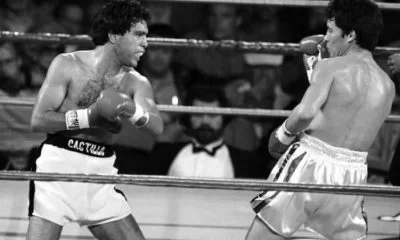
Two historic boxing figures who should already have had a trilogy behind them are only now getting around to their second fight, however the embers of greatness are still burning within the both of them. Mayweather vs. Manny Pacquiao II is scheduled for September 19, 2026 at the Sphere in Las Vegas. The first fight between these two in 2015 is thought to have produced boxing’s richest event and one of the more enthralling stylistic contests. Mayweather’s unanimous decision was masterful in its own way: defensive geometry and strategic control that neutralized what should have been explosive action on Manny’s part. The scorecards from that fight were: 118-110 and 116-112 (2x).
Mayweather’s last professional bout was on August 26, 2017, when he defeated Conor McGregor by 10th round TKO in Las Vegas. But the last full-time boxer Mayweather fought dates back to September 12, 2015, when he defeated Andre Berto by unanimous decision. At the time, that bout was billed as Mayweather’s farewell fight, marking his 49-0 professional career record.
Manny Pacquiao’s record stands at 62-8-3, with 39 KOs. He’s had an extensive career spanning two decades, including being victorious in world title fights in eight weight classes. Pacquiao is only months off of his last title venture whereas Floyd’s last title fight is over a decade ago. On July 19, 2025, Pacquiao fought Mario Barrios to a majority draw, with Barrios retaining his WBC World Weterweight title. Prior to that, Pacquiao fought on August 21, 2021, with a 12 round unanimous decision loss to Yordenis Ugas for the WBA Welterweight Title. Manny is allegedly scheduled for an exhibition fight vs Ruslan Provodnikov on April 18, 2026.
The Rhetoric of Conflict: Logan Paul’s Claims
Sometimes YouTube metrics and public feuds seem to matter as much as title belts. In recent months, Logan Paul has renewed a long-running grievance over the 2021 exhibition he staged against Floyd Mayweather, Jr., asserting on a recent podcast that he is still owed money from that bout. He claimed that Mayweather “pre-sold” the fight to a Middle Eastern company for $10 million and that his contractual cut of 15 % was never paid. This speaks to a recurring theme in boxing’s modern economy, where spectacle bouts generate immense revenue yet sometimes leave loose ends in their financial details. Paul’s comments amplify the fact that marquee exhibition events are capable of attracting huge pay-per-view interest and global attention.
Heavyweight Horizons: Usyk’s Title Defenses and Emerging Narratives
The heavyweight division, boxing’s traditional throne, appears to be moving through its own season of intrigue. Oleksandr Usyk is set to defend his WBC heavyweight title against Rico Verhoeven on May 23, 2026, in Giza, Egypt.
Verhoeven is not a conventional challenger. He is a titan in kickboxing, with a record of 54-10 and repeatedly crowned as one of that sport’s greatest heavyweights. With a boxing record of 1-0, he lacks the world title pedigree traditionally expected of a top‑weight challenger. The WBC’s decision to sanction this fight as a legitimate heavyweight title defense has sparked debate among boxing purists.To some, it is an exciting bridge between fanbases; to others, it undermines the meritocratic cadence of championship boxing. In a sport increasingly comfortable with spectacle and global staging, the Usyk‑Verhoeven pairing represents boxing’s willingness to bend tradition in the pursuit of global engagement.
On the other end of the heavyweight leaderboard is Agit Kabayel, a German contender whose name has surfaced in interviews and boxing media as a potential future opponent for Usyk or other leading heavyweights. As of this writing, however, no date, venue, or sanctioning has been confirmed for a Kabayel–Usyk bout.
Boxing’s Political Economy: Power, Leverage, and the Next Realignment
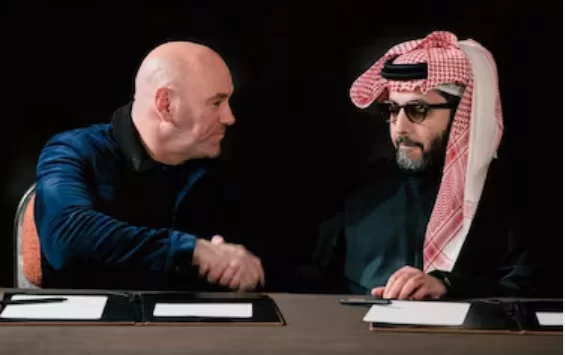
Media outlets are reporting that British promoter Frank Warren and his Queensberry Promotions have filed a formal lawsuit against Saudi entertainment giant Sela and TKO Group Holdings, the corporate parent of the UFC and WWE, seeking up to $1 billion in damages. The suit alleges that exclusive agreements Queensberry signed with Sela in September 2023, contracts under which Queensberry provided operational expertise as Saudi interests first moved into staging major boxing events, were breached when Sela and TKO struck a direct partnership to form Zuffa Boxing without Queensberry’s involvement. According to the complaint, those actions denied Queensberry expected income it says it would have earned if its contracted role had been honored.
Zuffa Boxing, formally founded in June 2025 as a joint venture between Sela (60 %) and TKO Group (40 %) with Dana White and Turki Alalshikh publicly positioned as its leaders, has been promoting professional boxing events, including high‑profile matchups such as the Canelo Álvarez vs. Terence Crawford “Riyadh Season” card in September 2025 and other 2026 fixtures that stream on Paramount+. What distinguishes this litigation from mere promoter grumbling is its scale and specificity: Warren’s complaint asserts that the foundational Sela‑Queensberry contract, along with a separate agreement granting TKO access to certain operational data, were used in ways that ultimately cut Queensberry out of later commercial arrangements.
The suit does not merely hinge on bruised egos or territorial disputes; it alleges tangible financial harm. Queensberry claims its projected earnings from future Saudi‑backed events and related promotional work have been undermined by the formation of a competing promotional entity that capitalized on relationships and information that its own agreements helped cultivate. The litigation is now pending in the British High Court, and while all defendants have yet to publicly disclose full legal responses, Sela and its partners have, in past reporting, dismissed similar allegations as “unfounded.”
What this clash reveals a deeper philosophical tension in modern boxing: an increasingly centralized, capital‑intensive promotional model backed by sovereign funds and sports‑entertainment conglomerates versus the fragmented, negotiated ecosystem that promoters like Warren have navigated for decades. Old alliances remain operational, established promoters are still integral to many of the biggest cards, but the balance of structural influence is shifting in real time, and the sport’s future economic architecture is now being contested as vigorously in court filings as in championship bouts.
To comment on this article in the Fight Forum, please CLICK HERE