Featured Articles
This Day in Boxing History: Four Fights that Measured Greatness

This Day in Boxing History: Four Fights that Measured Greatness
Boxing has always had a curious relationship with dates. Certain nights become permanent fixtures in the sport’s memory; not just for the titles that changed hands, but for the men who revealed themselves beneath the lights.
March 1 is one of those dates.
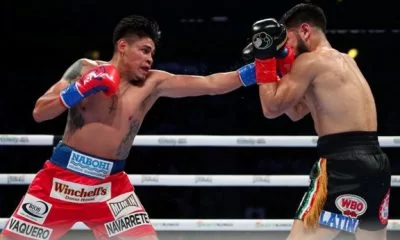
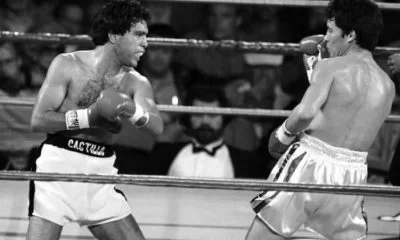
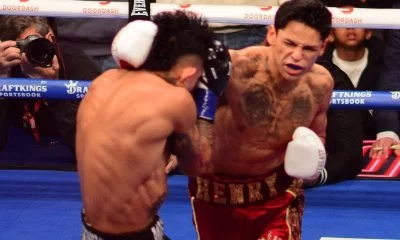
Across four different decades, four significant bouts unfolded on that day: Bobby Chacon vs. Jesus Estrada, Azumah Nelson vs. Jeff Fenech, Israel Vazquez vs. Rafael Marquez, and Sugar Ray Leonard vs. Hector Camacho.
Different eras. Different weights. Different outcomes. But each fight revealed something enduring about the men inside the ropes and about the sport itself.
Bobby Chacon vs. Jesus Estrada
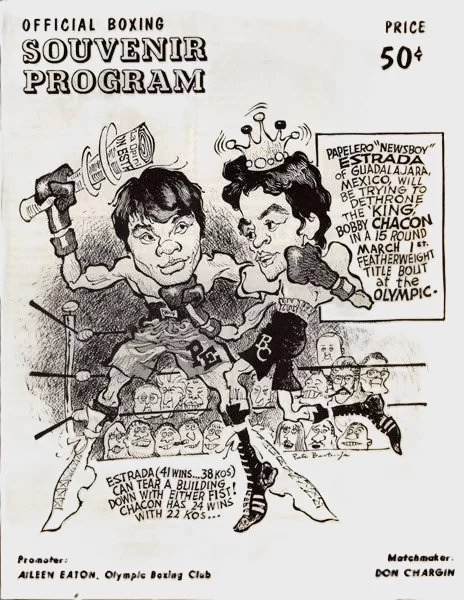
March 1, 1975 : The Olympic Auditorium, Los Angeles, CA — WBC Featherweight Title
Born in Sylmar, CA in 1951, Chacon carried himself like someone who understood that nothing worth having comes without cost. “Schoolboy” Bobby Chacon was more than a champion in Los Angeles, he was a symbol of the working class. Chacon represented the toughness, sacrifice, and emotional rawness of his community, and they saw themselves in the way he fought. Chacon fought as if surrender were a foreign language.
He had won the vacant WBC featherweight crown in 1974 by stopping Alfredo Marcano. On March 1, 1975, he would defend it against Jesus “Papelero” Estrada at the Olympic Auditorium in Los Angeles. Chacon was to make quick work of his opponent, dropping Estrada twice in the second round. Referee John Thomas stopped the bout at 2:38 of Round 2.
In a post fight comment, Jesus Estrada stated, “He was the fastest thing I have seen on two feet. I thought I had him, but I didn’t”. Chacon earned $57,000 for defending his title, while his opponent earned $7,500.
Azumah Nelson vs. Jeff Fenech
March 1, 1991: Princess Park Football Ground, Melbourne, Australia— WBC Super Featherweight Championship (Rematch)
Azumah “The Professor” Nelson embodied cold efficiency.
Born in Accra, Ghana, Nelson rose from humble beginnings to become Africa’s most celebrated boxer. By 1991, he was already a two-division world champion and a national icon. Opposite him stood Australia’s Jeff Fenech, unbeaten and ferociously proud, moving up in weight to challenge for Nelson’s WBC 130-pound crown.
Their first meeting in June of 1991 ended in a highly controversial split decision draw. Many observers believed Fenech had done enough to win and the decision was debated vigorously in both hemispheres.
The rematch, staged on March 1, 1992, in Melbourne, was meant to settle the argument.
For seven rounds, Nelson put on a master class, hitting him pretty much at will and blocking most of what was being returned. Nelson dropped Fenech in both the first and second round. It was evident that Nelson was at the top of his game. By the eighth round, the accumulation was taking its toll. Fenech was down yet again. He was eating shots when referee Arthur Mercante, Sr. rescued him and called a stop to the bout. The official result was Azumah Nelson by TKO in round 8. There was no controversy. The champion had imposed his will.
It’s been said that when discussing his first outing with Fenech, Azumah explained his own lackluster performance and stated, “I wasn’t in shape, I had malaria, and I had a chest infection”. Apparently he was only “mostly dead” in that first fight. Nelson’s second outing would convince fight fans that his litany of excuses may very well have been sincere.
Note: According to the Sport Australia Hall of Fame (SAHOF.org.au/hall-of-fame-member), In 2022 at the World Boxing Council (WBC) convention, some thirty years after their first fight, the WBC reversed the split decision draw. Fenech was retroactively awarded the win, giving him his fourth world title. A panel of judges had reviewed the fight and declared Fenech the winner, with the WBC board of governors endorsing the result.
Sugar Ray Leonard vs. Hector Camacho
March 1, 1997: The Convention Center, Atlantic City, New Jersey – IBC Middleweight Title
By the time Sugar Ray Leonard stepped into the ring in 1997, his legacy had long been secured.
Born Ray Charles Leonard on May 17, 1956, in Wilmington, North Carolina, and raised in Maryland, Leonard won Olympic gold in 1976 and became one of boxing’s most charismatic figures. As welterweight champion and later middleweight champion, he had engaged in defining battles with Roberto Duran, Thomas Hearns, and Marvin Hagler; the so-called “Four Kings” era that defined the 1980s.
He had retired more than once. Each comeback chipped slightly at the aura of invincibility.
On March 1, 1997, at age 40, Leonard faced Hector “Macho” Camacho in Atlantic City. Camacho, born in Bayamón, Puerto Rico, in 1962, had been a prodigy in the 1980s; a three-division world champion known for hand speed, defensive reflexes, and theatrical bravado. In his prime, Camacho was electric. By 1997, he was no longer at his peak, but he retained speed and confidence.
Leonard had not fought in six years.
From the opening bell, the difference in timing was evident. Leonard’s instincts remained, but the reflexive sharpness that once separated him from contemporaries had dulled. Camacho, cautious but accurate, capitalized. He landed quick combinations, stepped away from counters, and forced Leonard to repeatedly reset.
In the fifth round, a flurry dropped Leonard. He rose, but the follow-up assault prompted referee Joe Cortez to stop the bout, with Camacho winning by TKO in round 5. Leonard didn’t question the stoppage, he knew his time had come to walk away from the sport. While he said he had no excuses, he did refer to a calf injury that required an injection before the fight.
Israel Vazquez vs. Rafael Marquez III
March 1, 2008: Home Depot Center, Carson, California — WBC Super Bantamweight Title
Some rivalries transcend belts. Vazquez-Marquez was one of them.
Their first meeting in March 2007 ended when Vazquez, suffering a broken nose, could not continue after seven rounds. The second bout later that year saw Vazquez stop Marquez in six.
The rubber match came on March 1, 2008.
By then, both men understood each other intimately: strengths, weaknesses, and habits under fire. What followed was twelve rounds of sustained, technical violence.
Vazquez boxed with slightly greater intensity early, using movement and combinations. Marquez countered sharply, particularly with the right hand. As the fight progressed, both men absorbed heavy punishment.
In the twelfth and final round, with the scorecards razor-thin, Vazquez floored Marquez with a left hook. Marquez rose, as he always did, and finished the fight on his feet.
The decision was split: 113-112 for Vazquez; 113-112 for Marquez….and 114-111 for Vazquez.
It was named The Sweet Science’s Fight of the Year for 2008 and remains one of the finest trilogy bouts of the modern era.
A fourth fight would follow in 2010. Vazquez was dropped in the third round, got up and fought on, but was badly cut over both eyes. Referee Raul Caiz, Jr., who had given him an opportunity to continue, stopped the bout when it became evident that Vazquez was taking damage without responding. Vazquez’s vision was impeded from his own blood, and we would later learn that he suffered a detached retina.
Across all four fights, they shared 28 brutal rounds. Vazquez retired with a 44-5 record, with 32 coming by way of knockout. Marquez finished 41-9, with 37 coming by way of knockout. Both men paid a visible physical toll. Israel “Magnifico” Vazquez’s passing in 2024 was met with reverence throughout the boxing world.
To comment on this article in the Fight Forum, please CLICK HERE.