Featured Articles
This Day in Boxing History: Title Shifts, Turning Points, and Underrated Classics

Some dates in boxing history leave their mark more quietly, threading together turning points across divisions, eras, and continents. November 26th is one of those dates. From a middleweight brawl in early-1900s California, to modern displays of technical brilliance in Las Vegas, the day has repeatedly produced meaningful shifts in the sport’s trajectory. What follows is a look at some of the major and not-so-major fights that unfolded on November 26th.
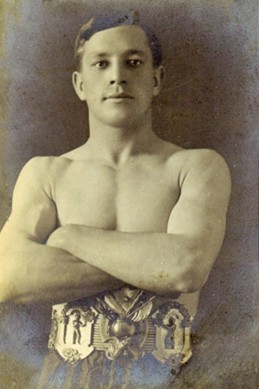
1908 — Stanley Ketchel Knocks Out Billy Papke to Reclaim the Middleweight Crown
Going back more than a century, on November 26, 1908 in Colma, California, Stanley Ketchel knocked out Billy Papke in the 11th round, regaining the world middleweight championship. This marked Ketchel’s second time holding the title, making him the first two-time middleweight champion in boxing history.
Papke had bested Ketchel earlier that year, but in the rematch, Ketchel methodically broke him down over the first ten rounds before delivering the decisive knockout. The fight was savage even by early 20th-century standards and is remembered not only for the outcome but for what it represented: a fighter returning stronger, hungrier, and smarter.
1954 — Pascual Pérez Becomes Argentina’s First World Boxing Champion

On November 26, 1954, in Tokyo’s Korakuen Stadium, flyweight challenger Pascual Pérez, a relatively unknown Argentine, dethroned the reigning flyweight champ Yoshio Shirai. After 15 brutal rounds, Pérez won by unanimous decision and made history by becoming the first boxer from Argentina (from all of South America) to win a world boxing title.
The significance of that night can’t be overstated. Pérez had been an Olympic-gold medalist in 1948 and was a celebrated amateur, but in the pro ranks he was often overlooked. That night in Tokyo, he boxed with courage and craft. With his victory, he didn’t just gain a championship belt, he put Argentine boxing on the world map. Local newspapers, fans, and even politicians embraced the victory; the atmosphere back home in Mendoza and Buenos Aires was electric.
Pérez would go on to defend the world flyweight title multiple times — forging a durable legacy that endured for years.
1979 — Eusebio Pedroza’s Quiet Dominance Continues

Panamanian legend Eusebio Pedroza defended his WBA featherweight title on November 26, 1979, one of 19 defenses during a reign that lasted seven years. Pedroza may not be remembered with the same popularity as his compatriot Roberto Durán, but historians often cite him as one of boxing’s most quietly dominant champions.
1982 — Larry Holmes Retains Heavyweight Title Against Randall ‘Tex’ Cobb in a One-Sided Defense

Fast-forward to November 26, 1982. In Houston’s Astrodome, heavyweight Larry Holmes defended his WBC title against Randall “Tex” Cobb — a rugged contender known more for grit than finesse. The fight was scheduled for 15 rounds, but little about it was competitive. Holmes dominated from bell to bell, systematically dismantling Cobb. By the final bell, it was a unanimous decision: a lopsided win, but a win nonetheless.
The bout is remembered less for fireworks than for its aftermath. Its predictability and apparent mismatch was emblematic of a time when boxing’s golden continuity was under strain. For many observers, the fight underscored how title fights could be as much about business, spectacle, and money as they were about competitive sport. Some said it signaled a shift in how boxing’s elite capitalized status, more than competition
1994 — John John Molina vs. Tony Lopez III: End of a Lightweight Trilogy

On November 26, 1994, John John Molina and Tony Lopez fought their third and final bout — a rivalry that was fiercely contested and meaningful in the lightweight landscape of the early ’90s.
Molina took the rubber match by decision, closing a tight, gritty trilogy between two blue-collar fighters.
2011 — Canelo Álvarez Defends His First World Title Against Kermit Cintrón

Back on November 26, 2011, a young, flame-haired Canelo Álvarez defended his WBC super-welterweight belt for the third time.
He stopped Kermit Cintrón in the fifth round in Mexico City, in the kind of performance that showed he was growing out of the “prospect with a belt” label and into a genuine future headliner.
2016 — Vasiliy Lomachenko Dismantles Nicholas Walters

Inside the Cosmopolitan in Las Vegas, on November 26, 2016, Vasiliy Lomachenko gave one of the cleanest demonstrations of technical boxing this century. Walters entered undefeated, feared, and fresh off his thunderous rise at featherweight. But Lomachenko turned the fight into a graduate seminar. After seven rounds of footwork, angles, and psychological pressure, Walters simply said he’d had enough — the fight ended before the eighth began. It was a rare surrender from a proud puncher and a defining moment in Lomachenko’s ascent.
Looking across more than 100 years of boxing history, November 26th consistently produced moments that changed careers, opened doors, or revealed the sport’s direction. From the global breakthrough of Pascual Pérez to Lomachenko’s modern masterclass, from Ketchel’s early-era reclamation to Canelo’s early test as a young champion, the day offers a surprisingly cohesive portrait of boxing’s past and present.
Interesting Facts:
Stanley Ketchel vs Billy Papke (1908)
Stanley Ketchel and Billy Papke faced off four times during 1908 and 1909 in one of boxing’s earliest intense rivalries. Papke won their first fight on June 4, 1908, taking the middleweight title, but Ketchel reclaimed it in the rematch on September 7, 1908 — a bout later linked to the legendary (though unverified) “sucker-punch” story. Ketchel dominated again on November 26, 1908, with an 11th-round knockout, and closed the series on July 5, 1909, winning a 20-round decision to take the rivalry 3–1. Their battles ended only months before Ketchel’s death at age 24, cementing the series as one of boxing’s first great sagas.
Stanley Ketchel, the legendary “Michigan Assassin,” was fatally shot on October 15, 1910, at a ranch near Conway, Missouri. Reports at the time described him being shot in the back while seated at breakfast by a ranch hand, reportedly jealous over the ranch’s cook, Goldie Smith. Ketchel was shot in the lung and then struck with his own revolver before succumbing later that day at age 24. The ranch hand, along with Smith, was arrested and later convicted — Dipley for first-degree murder and Smith for robbery. While contemporary accounts emphasized the shocking domestic setting, modern historians note that motives remain uncertain, with robbery and jealousy both likely factors, making Ketchel’s death a mixture of documented fact and enduring legend.
Eusebio Pedroza
Pedroza held the WBA featherweight title for seven years and defended it 19 times, a record for the division.
He defended his belt in eight different countries, making him one of the most international champions of his era.
Pedroza eventually lost his title to a young Barry McGuigan, in a fight that turned McGuigan into a national icon in Ireland.
Larry Holmes vs. Randall “Tex” Cobb (1982)

Holmes landed over 300 jabs, an absurd number in what was one of the most one-sided title fights of the decade.
The fight is best known for Howard Cosell’s reaction. After watching Cobb absorb punishment for 15 rounds, Cosell declared on-air that he was done calling boxing, calling it “brutal” and “inhumane.” Cobb, hearing this later, joked “I can do my sport no greater service”.
Vasiliy Lomachenko vs. Nicholas Walters (Nov. 26, 2016)
Walters was undefeated and known for stopping Nonito Donaire — but this fight marked the first and only time he quit on his stool. After the loss, Walters did not fight for almost seven years, only returning in 2023.
Lomachenko, frustrated by lack of top opponents, began calling himself “Hi-Tech,” saying he would simply “reprogram” whoever he fought. Walters was the first example people point to. Lomachenko forced surrender in back-to-back fights (Walters and the next opponent, Jason Sosa), a rarity in modern elite boxing.